.png)
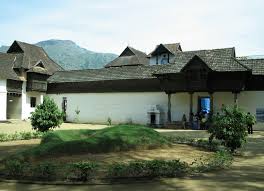
Durbar Hall of the palace has a with a shiny black floor specially made from a combination of egg white, jaggery lime, burnt coconut, charcoal and river sand, granite tubs to cool curd and buttermilk, secret underground passages, the King's bedroom with a four poster medicinal bed, mural paintings, pictures of Lord Krishna, hanging brass lanterns lit continuously since the 18th century, open air swimming bath, granite dance hall, Saraswathi (goddess of knowledge) temple, large earthen urns, room for scribes and accountants, carved figures on columns holding oil lamps, pooja (worship) rooms with jackfruit tree columns, fish carvings on the ceilings, enormous teak beams, Belgian mirrors and an outer cyclopean stone wall fitted together without mortar. Location: Kanyakumari
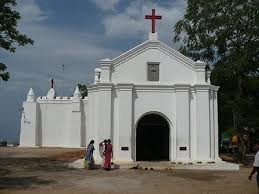
After building seven churches on this coast, St Thomas crossed over to Coromandel Coast of India's eastern seaboard and enriched the southern part of India with the seeds of the Gospel in a land that had never known what this Gospel of salvation was. It was a hard fight which made him to go into hiding in the Little Mount. When at last he reached the Parangi Malai (present St Thomas Mount), perhaps he found that this place was better suited for his life of solitude and prayer. But that very spot and that very moment of prayer were sealed and sanctified when he became a libation for the Gospel in the year 72 A.D.
His mortal remains were shifted to Santhome where the huge Basilica of St Thomas was erected later to entomb the Apostle's body. Thus the three punctuations of his itinerary in the city of Chennai – Little Mount, St Thomas Mount and Santhome – became places of spiritual energy in the years to come. Location: Chennai