.png)
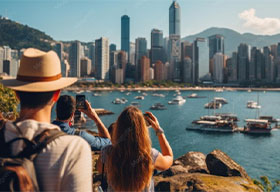 Hong Kong is expanding its tourism strategy by putting greater focus on major events, culture, regional travel, yacht tourism and visitor experiences.
The approach is designed to attract international travellers, encourage longer stays and increase tourism spending across different sectors of the economy.
The strategy comes as Hong Kong continues to record strong visitor numbers. According to the Hong Kong Tourism Board (HKTB), the city received about 36.67 million visitor arrivals in the first eight months of 2026, an increase of 11% from the same period last year. August recorded 5.46 million visitors, making it the highest monthly total since the pandemic, according to Travel Daily News.
Culture is becoming an important part of Hong Kong's tourism plans. The government wants to strengthen the city's position as a centre for international cultural exchange by bringing together exhibitions, performances, arts and creative industries with tourism.
“Hong Kong is blessed with a unique cultural vision, shaped by both Chinese and foreign influences,” said John Lee, Chief Executive of the Hong Kong Special Administrative Region.
He said the city would continue collaborating with Mainland and overseas cultural, arts and creative sectors while hosting international exhibitions and performances to attract visitors.
Major events are another key part of the strategy. Hong Kong plans to connect sports, entertainment and cultural events more closely with tourism. Under its wider “+ Tourism” approach, the HKTB will organise tourism promotion around three periods: The International Arts Season, Chinese Arts Season and Festive Mega Events Season. The objective is to encourage visitors to stay longer and spend more during their trips.
Hong Kong is also promoting multi-destination travel. More than 20% of overseas visitors travelled onwards to Mainland China through Hong Kong during the first half of 2026. The government plans to work with Mainland cities and airlines to promote itineraries that combine Hong Kong with other destinations.
“The proportion of overseas visitors travelling onwards to the Chinese Mainland via Hong Kong has continued to rise, exceeding 20% in the first half of 2026,” said Rosanna Law, Secretary for Culture, Sports and Tourism, Hong Kong.
The strategy also extends beyond traditional sightseeing. Hong Kong plans to develop tourism linked to finance, heritage, ecological conservation and industrial brands. A new “ticket stub economy” initiative will connect major events with restaurants, retailers and tourism businesses, encouraging visitors to explore more of the city after attending events.
Yacht tourism is another area receiving attention. Hong Kong is developing new marina and yacht facilities, while cross-border yacht travel within the Greater Bay Area is being expanded. Since May, Hong Kong and Macao yachts have been able to navigate in nine Mainland Greater Bay Area cities under new arrangements.
Hong Kong is also strengthening its appeal to Muslim travellers. The HKTB will extend its Hong Kong Restaurants Halal Certification Funding Scheme until the end of 2027 to encourage more Muslim-friendly dining options.
Overall, Hong Kong's updated tourism strategy is moving toward a broader visitor economy that connects travel, culture, events, dining, regional destinations and leisure experiences. The government aims to use these areas to attract international visitors while encouraging longer stays and wider tourism spending across the city.