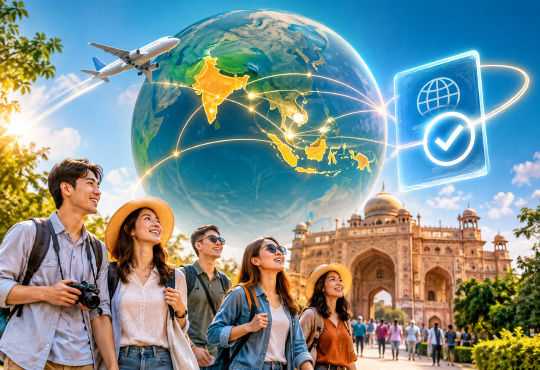
India is planning to make international travel more accessible for visitors from Southeast Asia by proposing free electronic tourist visas (e-Visas) for citizens of all 11 member countries of the Association of Southeast Asian Nations (ASEAN). Prime Minister Narendra Modi put forward the initiative during the 23rd India–ASEAN Summit held in Manila, Philippines, on November 17, 2026. The proposal is aimed at encouraging tourist arrivals, strengthening regional connectivity and expanding people-to-people relationships between India and Southeast Asia.
The initiative forms part of nine proposals presented by India to strengthen its Comprehensive Strategic Partnership with ASEAN. It also supports the country's broader Act East Policy, which focuses on improving economic, cultural and strategic engagement with Southeast Asian nations.
11 ASEAN Countries to Benefit from the Proposal
The proposed free tourist e-Visa initiative covers citizens from Brunei, Cambodia, Indonesia, Laos, Malaysia, Myanmar, the Philippines, Singapore, Thailand, Timor-Leste and Vietnam.
By reducing visa-related costs, India aims to make its tourism destinations more attractive to travellers from these countries. The initiative could encourage more visitors to explore India's cultural heritage, historical landmarks, religious destinations, wildlife experiences and coastal tourism locations.
However, the proposal does not mean visa-free entry. Travellers would still need to apply for an electronic tourist visa and receive approval before travelling. The government has not yet released the complete eligibility conditions, visa validity, permitted duration of stay or a common implementation date for the proposed waiver.
Tourism Industry Looks at New Opportunities
The proposed initiative could create opportunities for India's tourism and hospitality businesses by making travel planning more affordable for international visitors. Hotels, tour operators, travel agencies, airlines and destination management companies could benefit from increased interest among Southeast Asian travellers.
India offers a wide range of experiences for international tourists, including heritage destinations such as Agra, Jaipur and Delhi, spiritual destinations such as Varanasi and Bodh Gaya, and nature-focused locations across Kerala, Rajasthan and the Northeast.
Improved visa accessibility could also encourage travel companies to develop specialised tour packages for visitors from ASEAN markets. These could include cultural holidays, wellness tourism, Buddhist pilgrimage circuits, heritage tours and regional food experiences.
Part of India's Wider ASEAN Engagement
The free e-Visa proposal is one of several initiatives announced during the summit. Other proposals include a long-term ASEAN–India Maritime Cooperation Plan, nuclear energy technical exchanges, a joint cyber forensics training programme, an ASEAN–India Space Hackathon and additional scholarships for ASEAN students at Nalanda University.
Addressing ASEAN leaders, Prime Minister Narendra Modi highlighted the importance of closer regional cooperation and tourism connectivity.
"Today, direct flights between India and nine ASEAN countries, along with growing tourism, are further evidence of our close ties," - Narendra Modi during his opening remarks at the 23rd India–ASEAN Summit.
Implementation Details Awaited
The Ministry of External Affairs and the Prime Minister's Office have listed free tourist e-Visas among India's proposed initiatives. The government is also working on broader visa-process simplification, with the Home Ministry expected to implement changes by the end of 2026.
For travellers, the key details to watch are the official launch date, eligible visa categories and the conditions of the fee waiver. Until the new arrangements are formally implemented, visitors should follow the existing application and fee requirements displayed on India's official e-Visa portal.
The proposal represents a potential step towards strengthening India's position as a preferred destination for Southeast Asian tourists while creating new opportunities for the country's travel and hospitality sector.