.png)
Akal Takht
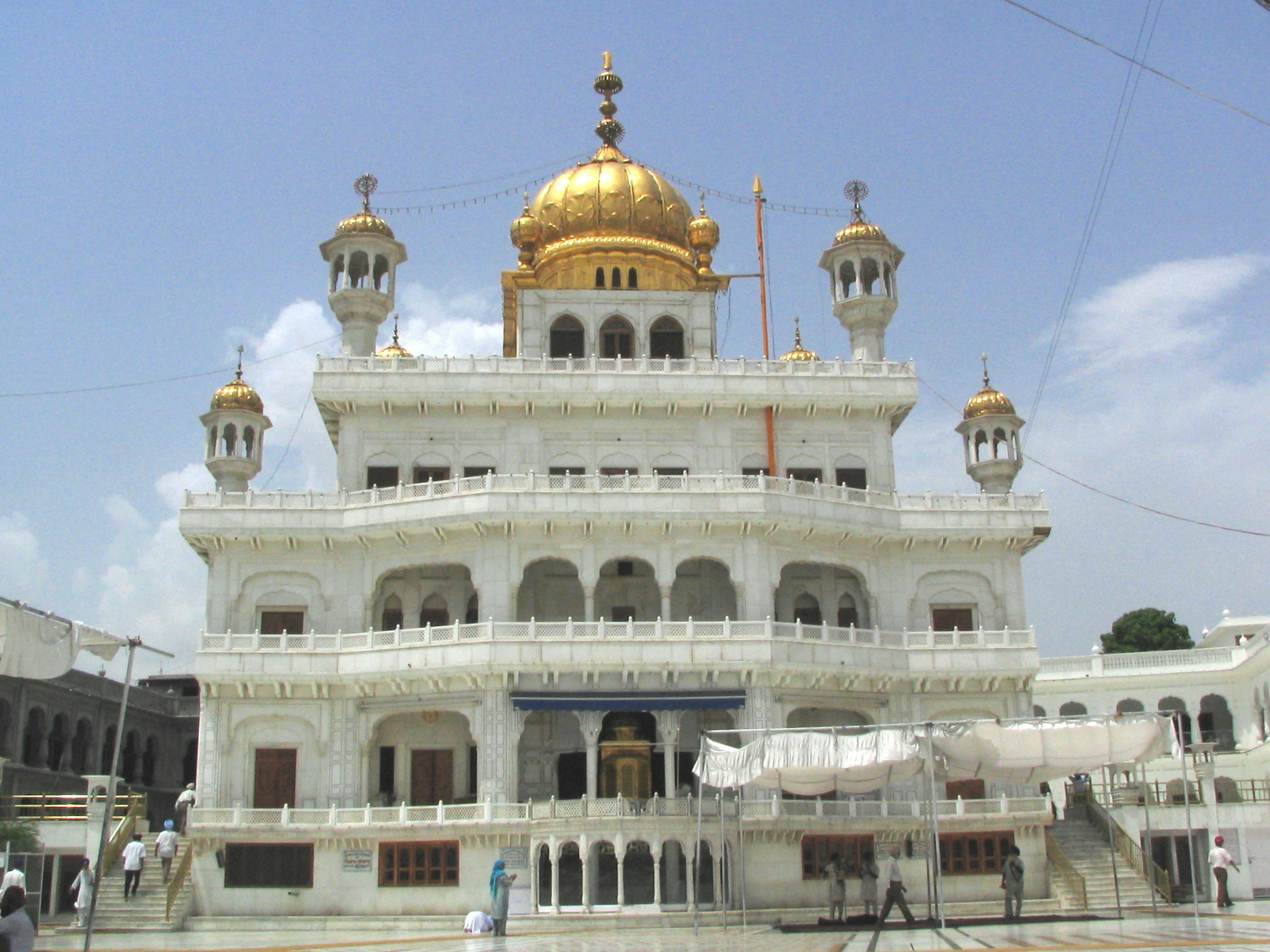
The word Akal, a negative of kal(time), is the equivalent of timeless, beyond time, everlasting, and takht, in Persian, that of royal throne or chair of state. Akal Takht would thus mean "timeless or everlasting throne" or throne of the Timeless One, i.e. God.In the Sikh system, God is postulated as Formless (Nirankar), yet to proclaim His sovereignty over His creation, He is sometimes referred to as sultan, patshah, sacha Patshah, or the True King. His seat is referred to as sacha Takht. the True Throne, sitting on which he dispenses sachcha niao, true justice (cc 84, 1087).
It also became common for Sikhs, at least by the time of Guru Arjan (1563-1606), to refer to the Guru as sacha patshah and to his gaddi or spiritual seat as Takht and the congregation he led as darbar or court. For the ceremonies of succession, he had a platform constructed opposite the Harmandir Sahib, naming it Akal Takht on 15th June 1606. The Guru laid the cornerstone and Bhai Buddha and Bhai Gurdas completed the construction, no third person being allowed to lend a helping hand.